Angry Goose Meme Template
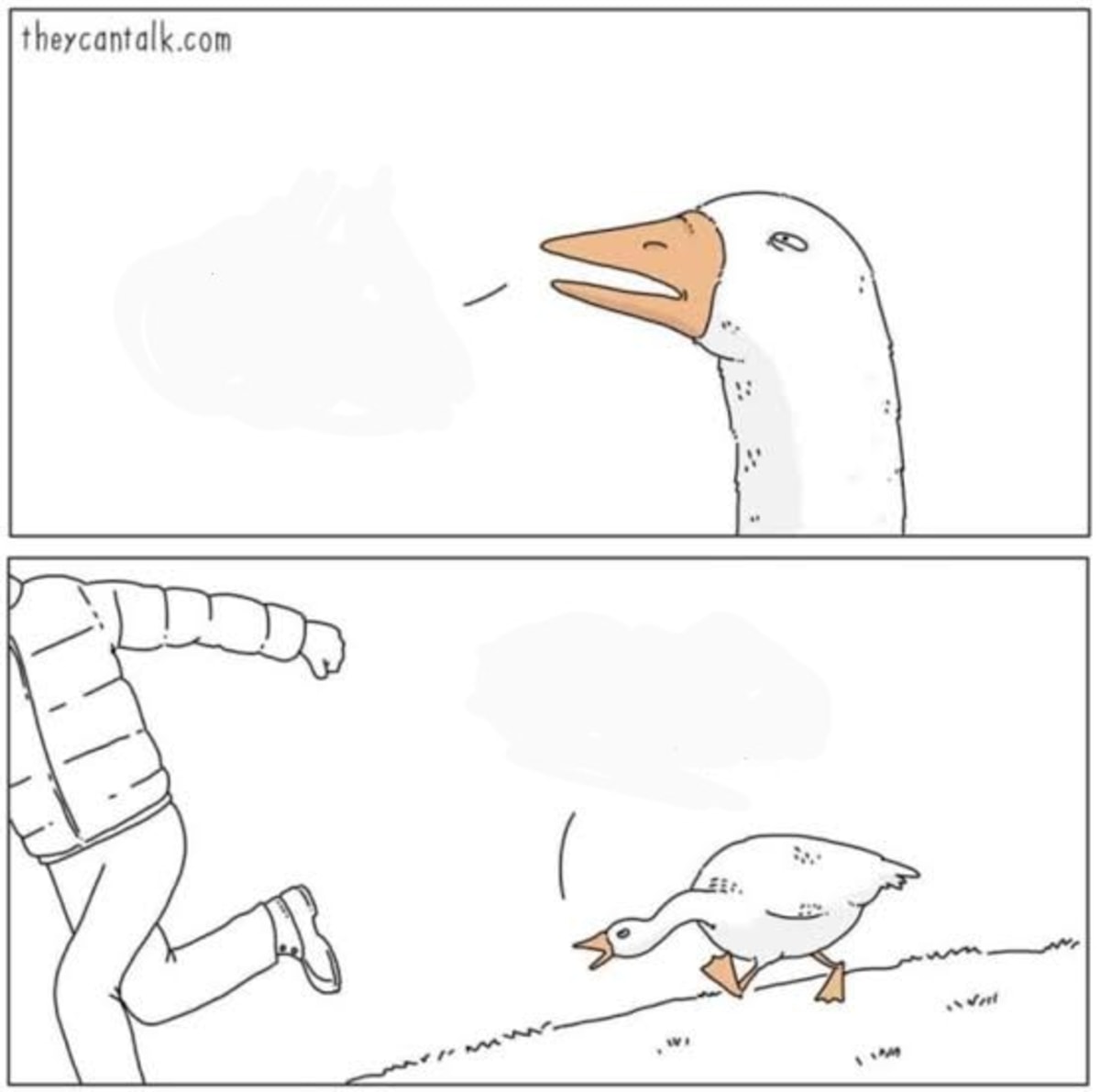
The app image carries the They Can Talk site mark. The artist’s official Tumblr archive has a goose-tagged comic titled “predicament,” posted November 14, 2021 and tagged with Jimmy Craig’s They Can Talk account; the image composition matches the app’s two-panel goose-and-running-person artwork. This is a better-supported source trail than the CSV’s claim that this specific comic appeared around 2017; I could not verify that earlier date. The meme uses the animal comic as an absurd pursuit: the goose calls out in the first panel, then keeps pressing the point as the person flees in the second. The humor is playful and chaotic, often fitting an irritating question, demand, or minor problem that will not let someone escape.
Free to try in your browser. Add text, adjust the layout, and download your meme.
Template images may be supplied through third-party sources. Check permission, attribution, and destination-platform rules before publishing. Report a rights or removal concern.
Related meme collections

How to use this meme template
What the Angry Goose meme means
The app image carries the They Can Talk site mark. The artist’s official Tumblr archive has a goose-tagged comic titled “predicament,” posted November 14, 2021 and tagged with Jimmy Craig’s They Can Talk account; the image composition matches the app’s two-panel goose-and-running-person artwork. This is a better-supported source trail than the CSV’s claim that this specific comic appeared around 2017; I could not verify that earlier date. The meme uses the animal comic as an absurd pursuit: the goose calls out in the first panel, then keeps pressing the point as the person flees in the second. The humor is playful and chaotic, often fitting an irritating question, demand, or minor problem that will not let someone escape.
A two-panel line-art comic: a goose’s head speaks from the upper panel; below, a person runs while the goose chases them. Each panel has a speech bubble that is captioned in the meme template, turning the sequence into a call-and-response or escalating exchange.
How the joke works
Slot 1 is the goose’s initial call-out, question, or demand. Slot 2 continues or repeats that same point with greater urgency, persistence, or absurdity as the person runs from the goose. Keep both captions tightly connected; the escalation from an ordinary exchange to relentless pursuit is the joke. A small grievance, awkward question, or task that follows someone around works well. Do not make the captions unrelated or use the second slot for a detached explanation.
- Top speech bubble: the goose’s initial question, call-out, or demand that starts the interaction.
- Lower speech bubble: the same point repeated or intensified while the goose pursues the fleeing person.
Caption examples
- Did you finish the release notes?
- DID YOU FINISH THE RELEASE NOTES?!
The same nagging question returns louder as the person tries to get away, matching the goose’s pursuit and the comic’s escalation.
- The goose wants to discuss the release notes
- Our office pizza arrives on Fridays
The captions do not form one exchange or escalation, so the chase has no readable connection to the text.
Situations it fits
- A nagging follow-up that keeps arriving after someone tries to leave
- A small task or reminder that grows impossible to ignore
- An awkward question someone avoids, only to be asked again more insistently
- A minor inconvenience portrayed as an absurdly relentless chase
When this format does not fit
- Do not make the two captions unrelated; slot 2 should continue the same demand or topic from slot 1.
- Do not put the whole joke in slot 1 and use slot 2 for commentary about the image.
- Do not make slot 2 calmer or less insistent; the chase should feel like an escalation.
- Do not turn the goose into a helpful guide or a peaceful resolution; the comic depicts comic pursuit.
- Do not state a 2017 publication date for this exact drawing without a source; the official tagged post located for this artwork is dated November 14, 2021.