Big Dog Small Dog Meme Template
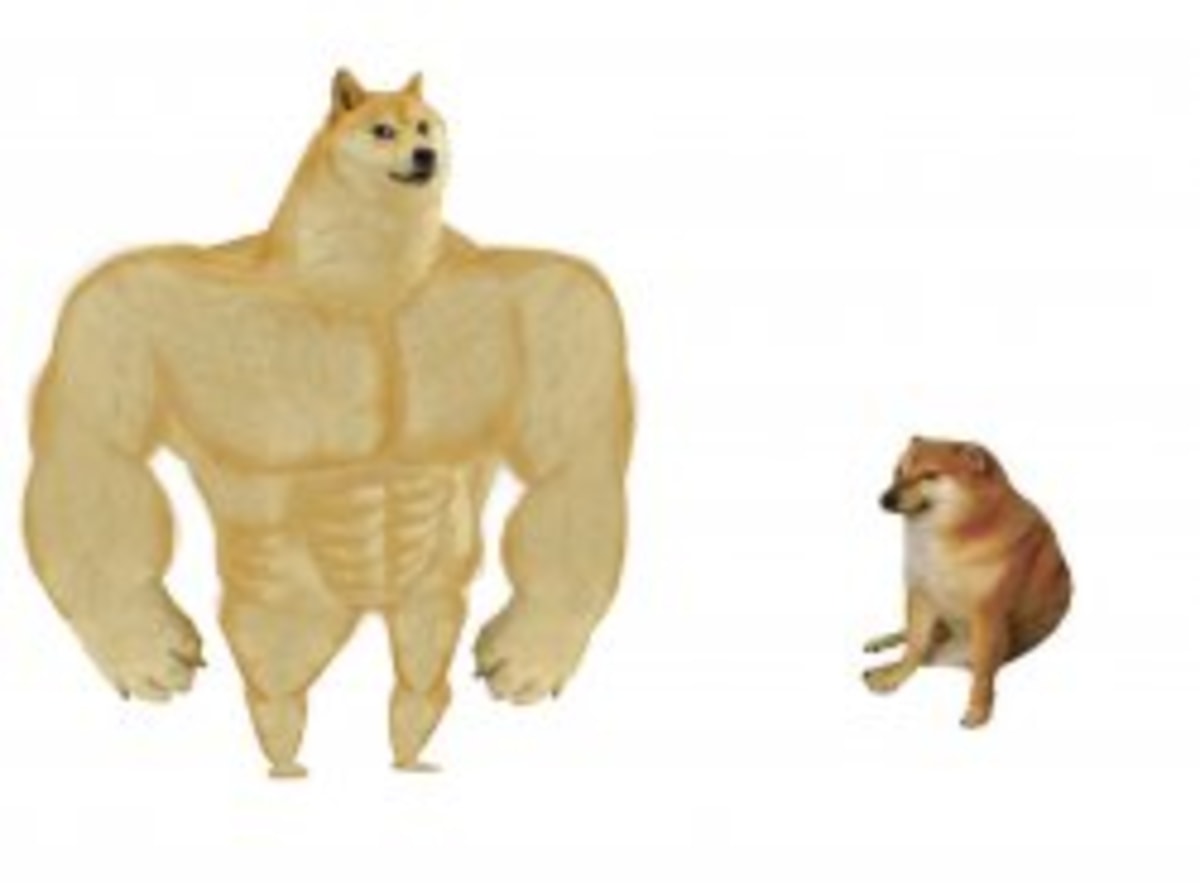
This image belongs to the Swole Doge / Cheems comparison family: an exaggeratedly muscular Doge-type Shiba is juxtaposed with a much smaller, less imposing Shiba in a two-way comparison. The broader Swole Doge vs. Cheems format became widely used in 2020 for paired examples, including “then vs. now,” where the top/first side is framed as stronger, more capable, or grander and the second as weaker, more anxious, or more mundane. Know Your Meme documents the format’s early 2020 spread and describes it as similar to Virgin vs. Chad comparisons. Dogecoin’s official history identifies the original Doge image as based on Kabosu; the Dogecoin Foundation identifies Balltze as Cheems and links Cheems to Swole Doge comparisons. This particular app asset is a simpler, side-by-side Big Dog Small Dog version; it is not the separate image of a crying Cheems.
Free to try in your browser. Add text, adjust the layout, and download your meme.
Template images may be supplied through third-party sources. Check permission, attribution, and destination-platform rules before publishing. Report a rights or removal concern.
Related meme collections

How to use this meme template
What the Big Dog Small Dog meme means
This image belongs to the Swole Doge / Cheems comparison family: an exaggeratedly muscular Doge-type Shiba is juxtaposed with a much smaller, less imposing Shiba in a two-way comparison. The broader Swole Doge vs. Cheems format became widely used in 2020 for paired examples, including “then vs. now,” where the top/first side is framed as stronger, more capable, or grander and the second as weaker, more anxious, or more mundane. Know Your Meme documents the format’s early 2020 spread and describes it as similar to Virgin vs. Chad comparisons. Dogecoin’s official history identifies the original Doge image as based on Kabosu; the Dogecoin Foundation identifies Balltze as Cheems and links Cheems to Swole Doge comparisons. This particular app asset is a simpler, side-by-side Big Dog Small Dog version; it is not the separate image of a crying Cheems.
On a plain white background, the left dog is a Shiba Inu with a dramatically oversized, muscular body; the right dog is a small, ordinary seated Shiba Inu. There is no text baked into the image. In the app, the first editable caption field is above the image and the second is below it; established examples use the top line for the big dog and the bottom line for the small dog.
How the joke works
Slot 1 (top) labels the big dog: an idealized, powerful, confident, capable, impressive, or nostalgic version of a person, thing, or approach. Slot 2 (bottom) labels the small dog: the contrasting weaker, less impressive, more anxious, or more ordinary version. The comparison may be past vs. present, plan vs. reality, ideal vs. everyday, or two competing choices. Make both lines refer to a clearly shared subject or comparison dimension so the intended difference is obvious. Keep the tone playful or self-aware rather than treating a group of people as inherently inferior.
- Top caption, big dog: label the stronger, more confident, more capable, or idealized side of the comparison.
- Bottom caption, small dog: label the contrasting weaker, more ordinary, anxious, or disappointing side.
Caption examples
- 14-year-old me planning to become a doctor, astronaut, and novelist
- Me now searching “how to convert a PDF to Word”
The captions compare the same person’s ambitious past expectations with an ordinary present-day struggle, mapping the grander version to the big dog and the humbler one to the small dog.
- Me pushing random buttons in production
- Me carefully using the tested deployment plan
The captions put the weaker, riskier behavior in slot-1/top and the capable plan in slot-2/bottom, reversing the big-dog then small-dog mapping.
Situations it fits
- Comparing an ambitious plan with the modest reality
- Showing a past capability alongside a weaker present version
- Contrasting a polished process with a clumsy workaround
- Comparing a confident expectation with an anxious reaction
- Playfully ranking two versions of a tool or routine
When this format does not fit
- Do not reverse the visual convention: slot-1/top goes with the big dog; slot-2/bottom goes with the small dog.
- Do not repeat the same caption in both slots or compare unrelated things with no shared dimension.
- Do not make the small-dog side the stronger or more impressive side unless an intentional reversal is unmistakable.
- Do not describe the bottom caption as a separate crying-Cheems image; this app asset is a muscular dog beside a small seated dog.
- Do not use the comparison to assert that real people or groups are inherently inferior; keep the contrast situational and playful.