Epic Handshake Meme Template
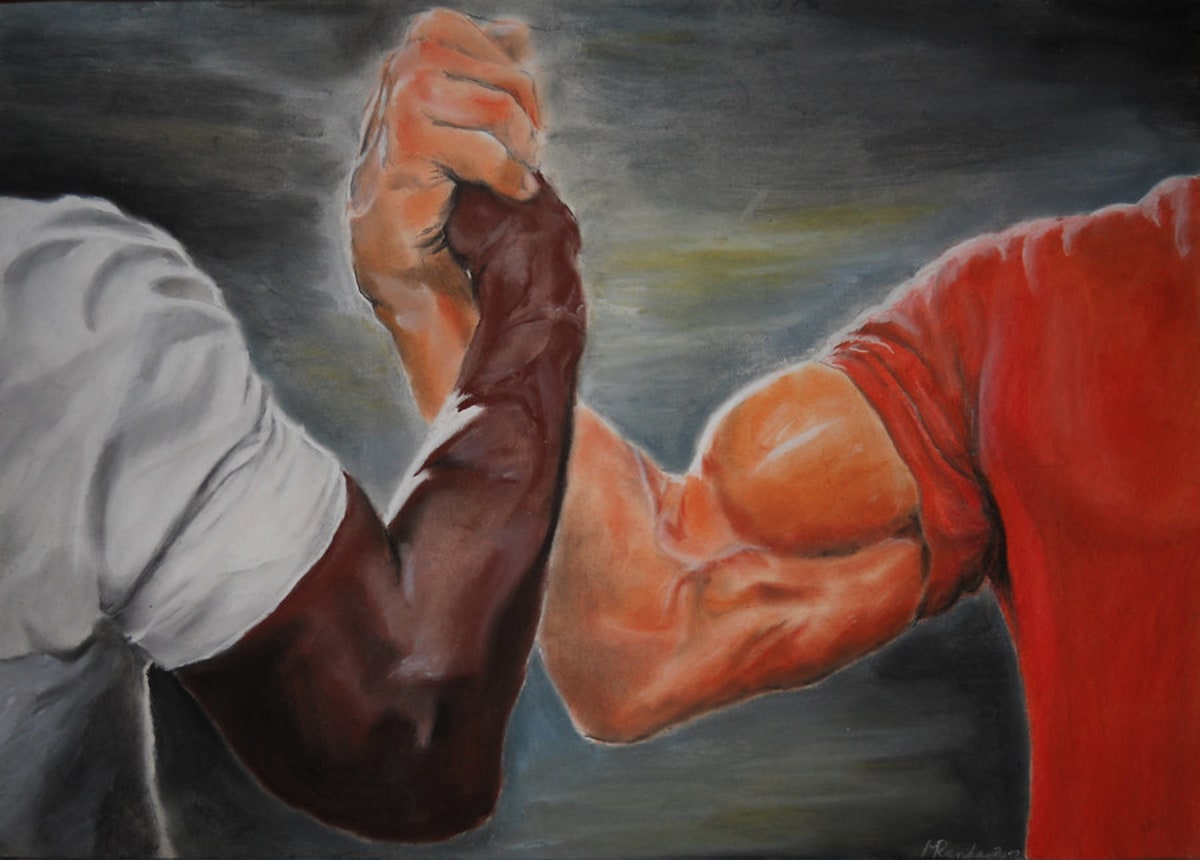
The handshake scene is from the 1987 film Predator: Dutch (Arnold Schwarzenegger) and Dillon (Carl Weathers) reunite and turn their greeting into an arm-wrestling-style clasp. Know Your Meme documents later remixes, a 2012 watercolor by Rory Dean, and a September 2012 chalk drawing by MILOSLAVvonRANDA; the latter became the familiar object-labeling template. By 2018 the format was being used to label two parties on the arms and a shared idea at the hands. The meme is a visual Venn diagram for unlikely agreement, overlap, or a common incentive, often played straight or ironically.
Free to try in your browser. Add text, adjust the layout, and download your meme.
Template images may be supplied through third-party sources. Check permission, attribution, and destination-platform rules before publishing. Report a rights or removal concern.
Related meme collections

How to use this meme template
What the Epic Handshake meme means
The handshake scene is from the 1987 film Predator: Dutch (Arnold Schwarzenegger) and Dillon (Carl Weathers) reunite and turn their greeting into an arm-wrestling-style clasp. Know Your Meme documents later remixes, a 2012 watercolor by Rory Dean, and a September 2012 chalk drawing by MILOSLAVvonRANDA; the latter became the familiar object-labeling template. By 2018 the format was being used to label two parties on the arms and a shared idea at the hands. The meme is a visual Venn diagram for unlikely agreement, overlap, or a common incentive, often played straight or ironically.
A chalk or pastel-style painting crops two muscular arms entering from opposite sides and clasping hands at the center. The active layout places one caption over the left arm, one over the right arm, and one over the joined hands in the middle.
How the joke works
Slot 1 labels one group, person, or idea. Slot 2 labels a second, often contrasting one. Slot 3 names their shared belief, behavior, goal, or incentive. The center must genuinely connect both sides; humor often comes from an unexpected or awkward commonality. Do not treat the three positions as a chronological setup/punchline.
- Left arm: identify the first group, person, position, or idea.
- Right arm: identify the second group, person, position, or idea.
- Joined hands: state the specific shared belief, behavior, goal, or incentive.
Caption examples
- People who want a quiet weekend
- People who want one more side quest
- Pretending the plan is still “low key”
The outer labels give groups with opposing expectations; the center names their knowingly shared excuse.
- Two coworkers
- A handshake
- Monday morning
These labels describe the image or time but do not show two sides sharing a meaningful point.
Situations it fits
- two groups that unexpectedly agree on a preference or complaint
- opposing teams sharing a practical incentive
- different hobbies or communities with one surprising overlap
- a satirical common ground between otherwise unlike groups
When this format does not fit
- Do not put the common ground in an outer slot; the center hands are the overlap.
- Do not make the outer labels identical unless the joke explicitly depends on their sameness.
- Do not invent a connection that neither side shares; the center must follow from both labels.
- Do not claim MILOSLAVvonRANDA created the original film scene; their chalk drawing is one later template artwork.