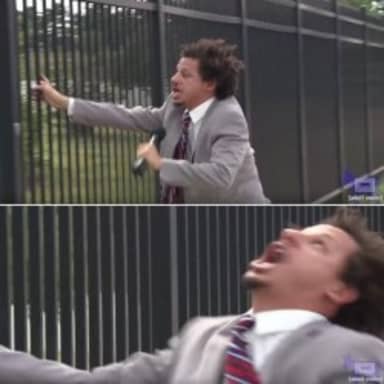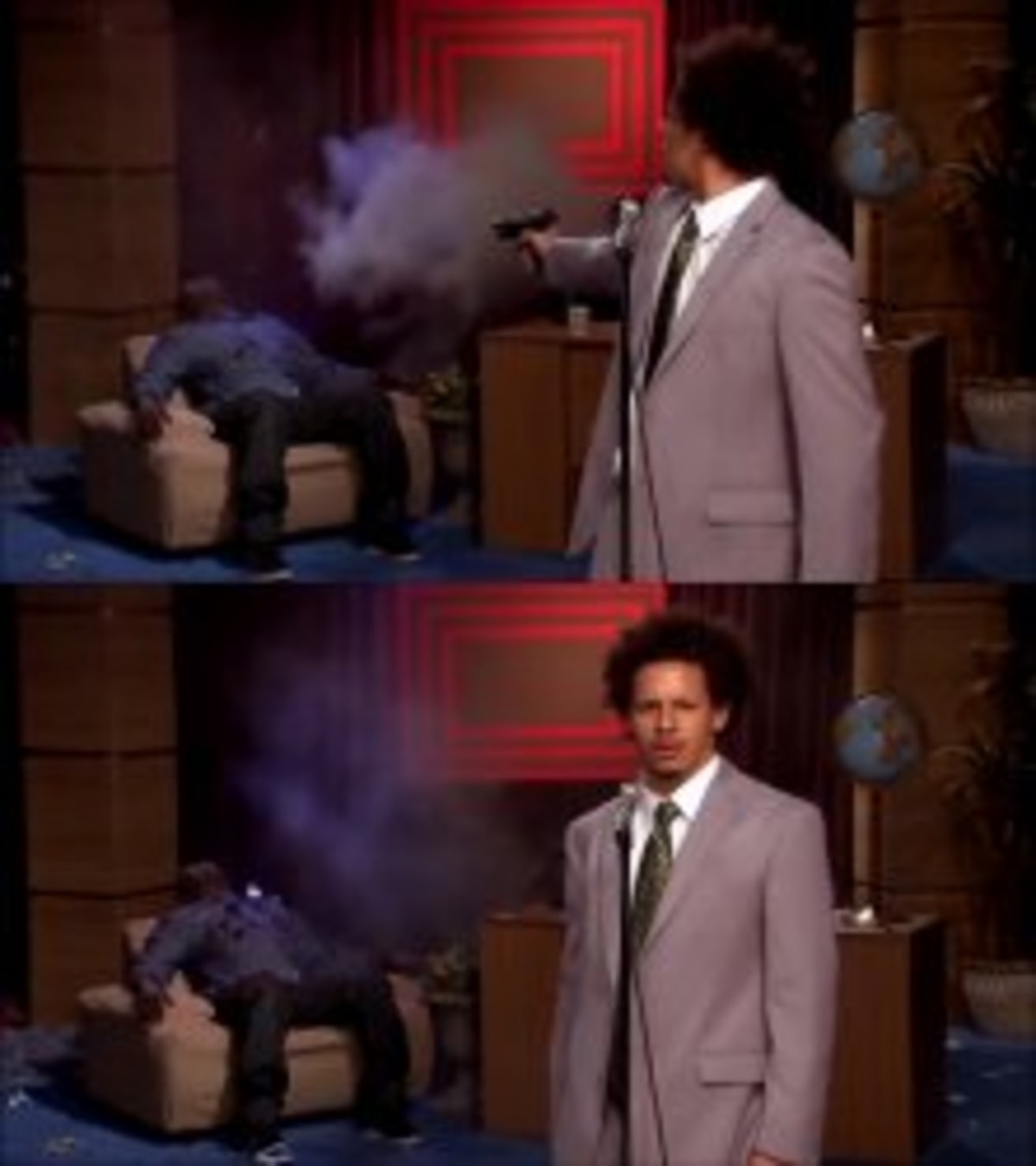
Eric Andre Shooter Meme Template
This is the “Who Killed Hannibal?” / “Why Would X Do This?” format from The Eric Andre Show. In the sketch, Andre shoots co-host Hannibal Buress, then turns to camera and asks who killed him. The three-box meme format labels the affected subject and the person or force involved, then adds a mock-innocent question or blame shift despite the obvious setup. Examples vary which upper label names the cause versus the target; keep both connected, and let the bottom line land the denial. It is a staged absurdist TV scene, not documentary footage.
Free to try in your browser. Add text, adjust the layout, and download your meme.
Template images may be supplied through third-party sources. Check permission, attribution, and destination-platform rules before publishing. Report a rights or removal concern.

How to use this meme template
What the Eric Andre Shooter meme means
This is the “Who Killed Hannibal?” / “Why Would X Do This?” format from The Eric Andre Show. In the sketch, Andre shoots co-host Hannibal Buress, then turns to camera and asks who killed him. The three-box meme format labels the affected subject and the person or force involved, then adds a mock-innocent question or blame shift despite the obvious setup. Examples vary which upper label names the cause versus the target; keep both connected, and let the bottom line land the denial. It is a staged absurdist TV scene, not documentary footage.
A two-panel still from The Eric Andre Show’s “Who Killed Hannibal?” sketch. In the upper panel Eric Andre holds a gun while Hannibal Buress is slumped on the left; in the lower panel Andre turns toward the camera with feigned confusion. The staged television scene has no baked-in captions. The active layout has three text boxes: upper-left, upper-right, and a wide box beneath the upper scene over the lower reaction.
How the joke works
Use three slots: slot 1 labels the affected person, thing, or situation in the upper-left; slot 2 labels the apparent actor, cause, or other relevant side in the upper-right; slot 3 gives a short fake-innocent question or blame-shifting reaction under the scene. The first two captions should make the relationship legible, and the final question should be absurd because the cause is already visible. It can be self-blame, fandom, gaming, group-chat chaos, or a fictional mishap; avoid real violence and real accusations.
- Upper-left label: the affected person, thing, or situation at the center of the mishap.
- Upper-right label: the apparent actor, cause, or other side of the connected situation.
- Bottom reaction: a mock-innocent question or blame shift that is funny because the setup makes the cause obvious.
Caption examples
- the whole Minecraft spawn
- me testing TNT indoors
- who blew up spawn??
The upper labels show the damaged place and the culprit; the bottom question pretends the cause is a mystery.
- the game lobby
- me disconnecting everyone
- I disconnected everyone on purpose
The bottom line admits responsibility plainly instead of feigning confusion or shifting blame.
Situations it fits
- a gamer causing a chaotic in-game result and acting baffled by it
- someone deleting a group chat or meme thread and pretending not to know where it went
- a fictional character causing a problem and blaming an unrelated force
- absurd cause-and-effect in fandom, online drama, or everyday life
- a self-own where the person responsible asks an obviously fake innocent question
When this format does not fit
- Do not collapse the upper-left, upper-right, and bottom reaction into only two captions.
- Do not make slot 3 sincerely accept responsibility; the format needs feigned innocence or an absurd blame shift.
- Do not make the upper labels unrelated; they must establish one clear situation or cause-and-effect pair.
- Do not treat the staged scene as real violence or news footage.
- Do not use real victims, active violence, or serious real-world accusations as the punchline.