High Vs Low Cortisol Meme Template
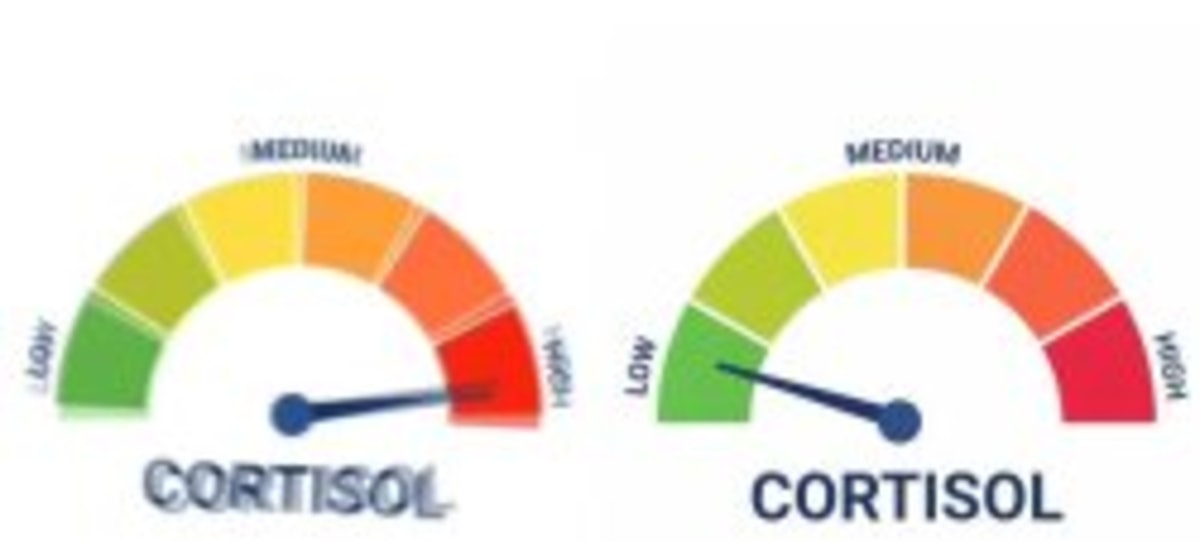
The template turns “high cortisol” and “low cortisol” into internet shorthand for stress versus calm or comfort. Know Your Meme documents the broader Cortisol Level / Cortisol Spike slang and reaction format as a 2025 internet trend; its usage treats cortisol readings humorously as a meter for stress, shock, cringe, or discomfort. MedlinePlus explains that cortisol helps the body respond to stress, but meme captions are colloquial comparisons, not hormone measurements or medical advice. The active image’s left needle points high and right needle low. Its two editor slots are horizontal top and bottom caption bands, rather than boxes directly over each dial, so caption text should label each condition explicitly.
Free to try in your browser. Add text, adjust the layout, and download your meme.
Template images may be supplied through third-party sources. Check permission, attribution, and destination-platform rules before publishing. Report a rights or removal concern.

How to use this meme template
What the High Vs Low Cortisol meme means
The template turns “high cortisol” and “low cortisol” into internet shorthand for stress versus calm or comfort. Know Your Meme documents the broader Cortisol Level / Cortisol Spike slang and reaction format as a 2025 internet trend; its usage treats cortisol readings humorously as a meter for stress, shock, cringe, or discomfort. MedlinePlus explains that cortisol helps the body respond to stress, but meme captions are colloquial comparisons, not hormone measurements or medical advice. The active image’s left needle points high and right needle low. Its two editor slots are horizontal top and bottom caption bands, rather than boxes directly over each dial, so caption text should label each condition explicitly.
The 250×113 graphic has two semicircular cortisol gauges side by side on a white background. Each dial has green, yellow, orange, and red segments, with “LOW,” “MEDIUM,” and “HIGH” labels around the arc and “CORTISOL” printed beneath. The left needle points into the red/high range; the right needle points into the green/low range. Two active caption bands span the image: one at the very top, and one at the bottom; neither phrase is baked in beyond the gauge labels.
How the joke works
Use slot 1 (top band) for a concise high-cortisol stressor, awkwardness, or frustration. Use slot 2 (bottom band) for a contrasting low-cortisol source of calm, relief, or comfort. Label the pair “HIGH CORTISOL:” and “LOW CORTISOL:” when needed so the relationship stays clear despite the captions being above and below two side-by-side gauges. The joke is an exaggerated everyday stress-versus-relief comparison, not a claim that the pictured situation changes anyone’s hormone levels.
- Top caption band: explicitly label the high-cortisol side and name a stressor, awkward moment, or frustration.
- Bottom caption band: explicitly label the low-cortisol side and give a contrasting source of calm, comfort, or relief.
Caption examples
- CAN WE JUMP ON A QUICK CALL?
- APPROVED, NO CHANGES NEEDED
A familiar work stressor is paired with a direct, calming resolution, and both conditions are labeled.
- HIGH CORTISOL: A DOG
- LOW CORTISOL: A CHAIR
These nouns do not establish why one situation is stressful and the other calming.
Situations it fits
- Contrasting a stressful workplace request with a clear resolution
- Comparing a chaotic environment to a calm or quiet alternative
- Showing what spikes everyday anxiety versus what brings relief
- Playfully ranking a familiar nuisance and its soothing opposite
When this format does not fit
- Do not make the two captions unrelated; slot 2 should clearly contrast with the stressor in slot 1.
- Do not treat meme “cortisol” labels as medical measurements, a diagnosis, or health advice.
- Do not reverse the visual’s needle readings: the left dial points high/red and the right dial low/green.
- Do not omit which caption is high versus low if the contrast could be ambiguous.