I Do ONE Push Up Meme Template
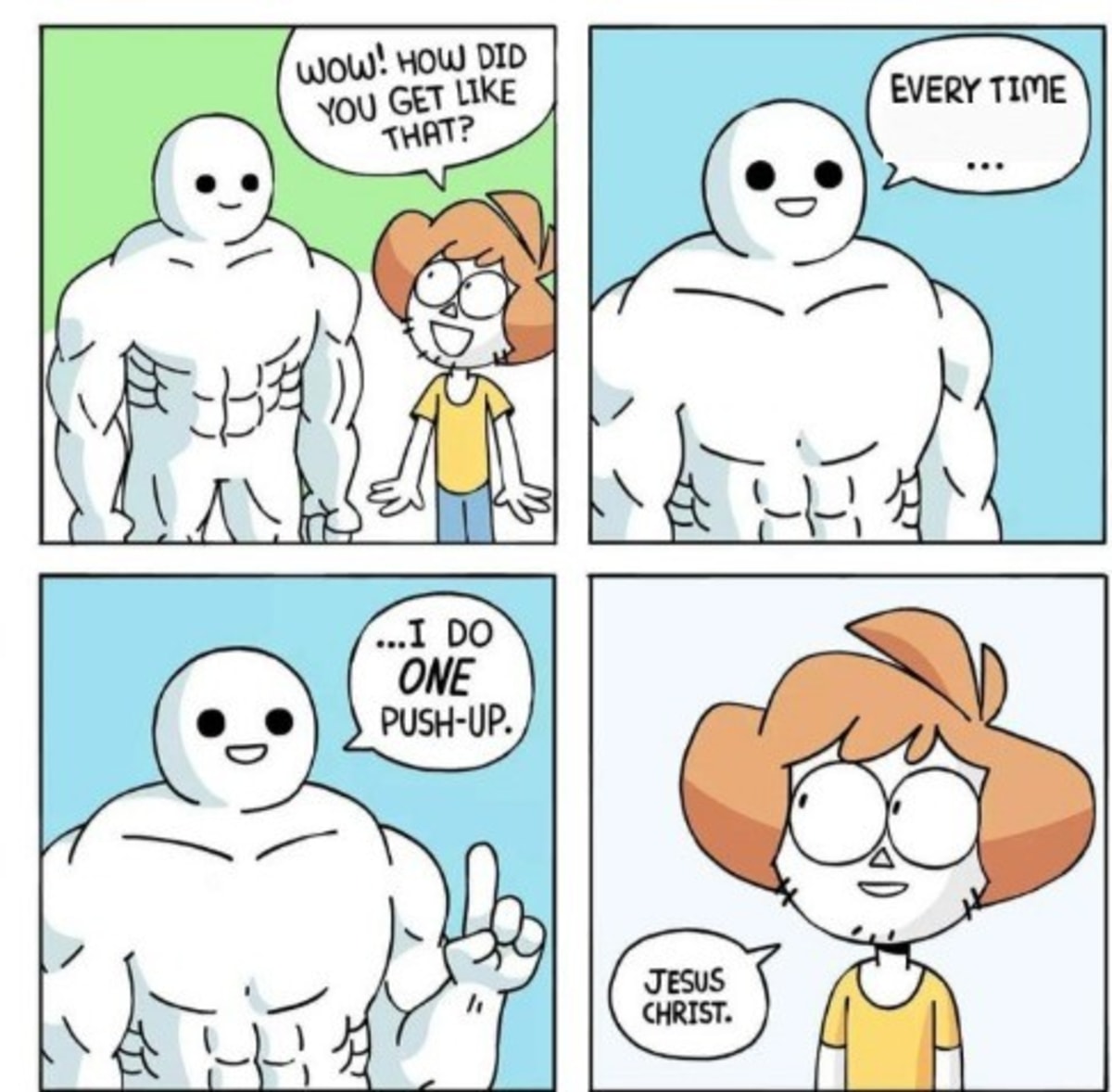
Know Your Meme identifies “I Do One Push-up” as a Shen Comix exploitable, added on July 6, 2020, and describes its first viral adaptations that same day. In the source joke, a muscular figure explains his physique by doing one push-up each time a recurring urge occurs; meme variants label the figure or change the repeated trigger, turning a tiny repeated action into an absurd explanation for an outsized result. This supports the CSV’s disproportionate-cause reading. The progress CSV says late 2018/early 2019, but the documented source and spread are in July 2020, so that earlier date is not carried forward.
Free to try in your browser. Add text, adjust the layout, and download your meme.
Template images may be supplied through third-party sources. Check permission, attribution, and destination-platform rules before publishing. Report a rights or removal concern.

How to use this meme template
What the I Do ONE Push Up meme means
Know Your Meme identifies “I Do One Push-up” as a Shen Comix exploitable, added on July 6, 2020, and describes its first viral adaptations that same day. In the source joke, a muscular figure explains his physique by doing one push-up each time a recurring urge occurs; meme variants label the figure or change the repeated trigger, turning a tiny repeated action into an absurd explanation for an outsized result. This supports the CSV’s disproportionate-cause reading. The progress CSV says late 2018/early 2019, but the documented source and spread are in July 2020, so that earlier date is not carried forward.
The active 486×477 catalog image is a four-panel Shen Comix strip: a small character asks a muscular figure how he got that way; the figure answers “EVERY TIME … I DO ONE PUSH-UP”; the small character reacts “JESUS CHRIST.” Those words and speech bubbles are baked into the image. The single active editable slot is a small 95×43 box at x=381, y=51, inside the upper-right speech bubble. It is much smaller than a normal caption area and should only receive a very short phrase; it may overlap the baked-in lettering.
How the joke works
The comic’s dialogue and punchline are already part of the image. The one editable slot sits in the tiny upper-right speech bubble, so it can only accommodate a short trigger, label, or replacement phrase; it cannot carry a full setup or caption. Use it to name a recurring action or cause that makes the muscular figure’s implausible result feel comically overdetermined, or a concise label that reframes the built-in exchange. The joke should retain the contrast between an absurdly small repeated effort and an impressive or disproportionate outcome. Because the original wording is baked in and may be partly covered by text, very short phrasing is essential.
- Very short recurring trigger or label placed in the tiny upper-right speech bubble; the main dialogue remains baked into the image. do not add everytie in the caption
Caption examples
- the build passes
A compact recurring trigger plausibly explains an absurdly strong developer through the comic’s built-in one-effort punchline.
- Here is a detailed explanation of the complicated process behind my impressive results
This is far too long for the tiny active speech-bubble slot and replaces the comic’s concise, absurd cause-effect mechanism with an explanation.
Situations it fits
- A tiny repeated habit is humorously credited for a disproportionate result
- A running joke or recurring event is framed as the unlikely source of someone’s expertise or strength
- A comic label reframes the already printed dialogue without requiring additional exposition
When this format does not fit
- Do not write a complete multi-clause sentence; the active box is only 95×43 pixels.
- Do not assume the built-in words are editable; only one additional text slot is active.
- Do not make the trigger unrelated to a repeated action or outsized result.
- Avoid attributing the comic to a different artist or asserting a pre-2020 origin without evidence.