I Made This Meme Template
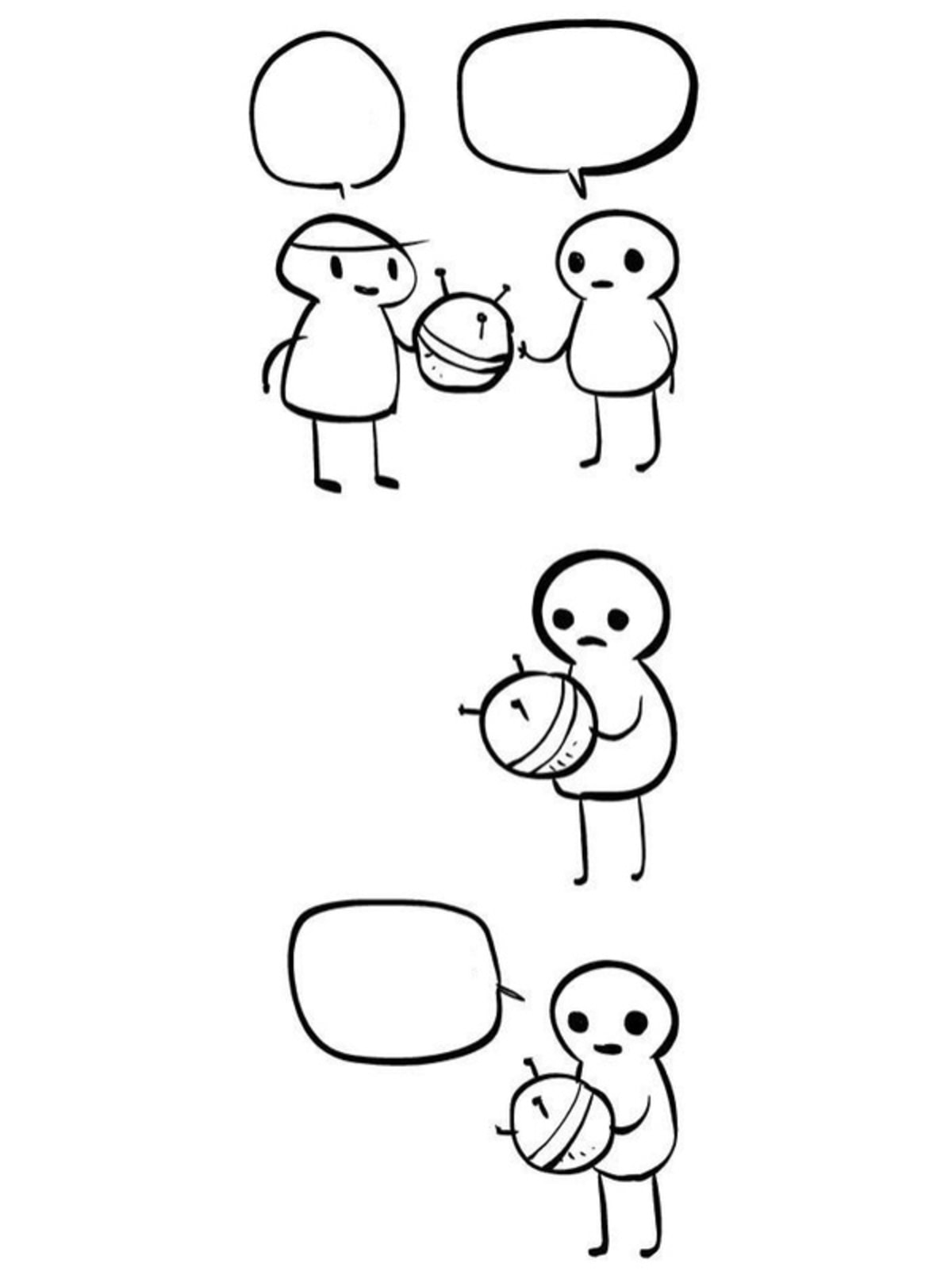
“I Made This” is an exploitable about someone claiming credit for work another person made. The source comic, “The Internet,” was posted by Nedroid creator Anthony Clark on Tumblr on January 30, 2013. It became especially apt for the authorship joke when it circulated under the title “I Made This.” It is used to satirize plagiarism, credit theft, or someone repeating another person’s idea and then presenting it as their own. Keep the theft/credit claim legible; the humor is the audacious reversal, usually with a dry, critical tone. The CSV context attributes the source to Cyanide and Happiness, but that attribution is incorrect: Know Your Meme and the original Tumblr post identify Nedroid / Anthony Clark.
Free to try in your browser. Add text, adjust the layout, and download your meme.
Template images may be supplied through third-party sources. Check permission, attribution, and destination-platform rules before publishing. Report a rights or removal concern.

How to use this meme template
What the I Made This meme means
“I Made This” is an exploitable about someone claiming credit for work another person made. The source comic, “The Internet,” was posted by Nedroid creator Anthony Clark on Tumblr on January 30, 2013. It became especially apt for the authorship joke when it circulated under the title “I Made This.” It is used to satirize plagiarism, credit theft, or someone repeating another person’s idea and then presenting it as their own. Keep the theft/credit claim legible; the humor is the audacious reversal, usually with a dry, critical tone. The CSV context attributes the source to Cyanide and Happiness, but that attribution is incorrect: Know Your Meme and the original Tumblr post identify Nedroid / Anthony Clark.
The active 600×801 black-and-white comic shows one character presenting a small object to another, then the recipient holding it alone. The image has three empty speech balloons: slot 1 is the upper-left balloon for the creator; slot 2 is the upper-right balloon for the recipient; slot 3 is the lower balloon beside the recipient holding the object. This catalog variant has no dialogue baked into the artwork.
How the joke works
Use the three speech balloons as a short authorship reversal: (1) the maker states they created a specific work or idea, (2) the recipient acknowledges or checks that authorship, then (3) the recipient claims the same work as their own. The final line should clearly reuse or claim the thing named in slot 1 so the credit theft lands. Adapt to harmless fictional, workplace, or everyday scenarios; do not assert an unverified real person committed plagiarism.
- Upper-left balloon: the actual maker names the work or idea they created.
- Upper-right balloon: the recipient reacts or confirms that the maker created it, setting up the reversal.
- Lower balloon: the recipient now holding the work claims authorship; echo the same work from slot 1.
Caption examples
- I built this little tool to sort our team’s bug reports.
- Wait, you built this?
- At the demo: “I made this bug-sorting tool.”
The recipient first recognizes the actual maker, then claims the very same tool, making the credit grab unmistakable.
- A teammate made a tool.
- That seems helpful.
- Thanks for sharing it.
These lines describe a normal exchange and never reverse who gets credit for the work.
Situations it fits
- Joking about a fictional coworker taking credit for a teammate’s contribution
- Pointing out a repost that strips the original creator’s credit
- Satirizing an organization rebranding an existing idea as its invention
- Showing someone repeat your joke moments later as if it were theirs
When this format does not fit
- Do not make slot 3 a different topic; it must claim the same work named in slot 1.
- Do not omit the acknowledgment in slot 2; it sets up the audacious reversal.
- Avoid accusing a real person or organization of theft without substantiation; use fictional or clearly hypothetical scenarios.
- Do not merely describe the drawing without an authorship reversal.