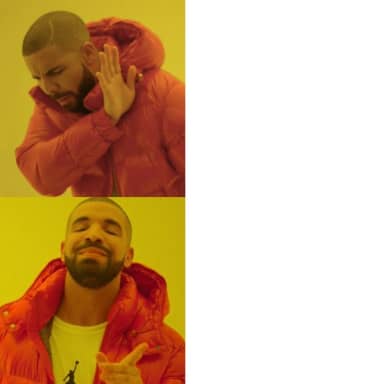
Average Fan Vs Average Enjoyer Meme Template
The format contrasts an “Average Fan” with an “Average Enjoyer” of the same thing. Slot 1 is the fan: invested, opinionated, or sometimes ragebaiting. Slot 2 is the enjoyer or foil: often relaxed, unimpressed by tiny distinctions, or happy to enjoy the thing without a debate. Humor comes from the attitude gap and can make the fan’s confidence look absurd; it does not need to claim the enjoyer is objectively superior.
Free to try in your browser. Add text, adjust the layout, and download your meme.
Template images may be supplied through third-party sources. Check permission, attribution, and destination-platform rules before publishing. Report a rights or removal concern.
Related meme collections

How to use this meme template
What the Average Fan Vs Average Enjoyer meme means
The format contrasts an “Average Fan” with an “Average Enjoyer” of the same thing. Slot 1 is the fan: invested, opinionated, or sometimes ragebaiting. Slot 2 is the enjoyer or foil: often relaxed, unimpressed by tiny distinctions, or happy to enjoy the thing without a debate. Humor comes from the attitude gap and can make the fan’s confidence look absurd; it does not need to claim the enjoyer is objectively superior.
A two-sided comparison with an expressive young man in the first panel and a sharply sculpted, confident portrait in the second. Slot 1 labels the Average Fan side; slot 2 labels the Average Enjoyer foil. The joke can make the fan’s intensity look ridiculous and the other side casually unbothered.
How the joke works
Slot 1 is the Average Fan side; slot 2 is the Average Enjoyer or foil. Keep both captions on the same subject. Slot 1 may overstate a preference, gatekeep, or treat a tiny difference as a huge deal; slot 2 gives the calmer or more casually amused counterpoint. In the ragebait example, slot 1 is “Average Pepsi or Coke ‘Fan’” and slot 2 is “Me who can’t even tell the difference.” Preserve that order. Other adjacent archetypes can work when they make a clear, funny contrast.
- Average Fan: the invested, opinionated, gatekeeping, or ragebaiting take about the shared subject.
- Average Enjoyer or foil: the calmer, unbothered, or amused response to that same subject.
Caption examples
- Average Pepsi or Coke “Fan”
- Me who can’t even tell the difference
Slot 1 is the person treating a tiny soda preference like a serious feud; slot 2 is the unbothered person who cannot even tell the difference. This preserves the intended fan-first, foil-second order.
- My favorite song
- A sandwich
The captions have no shared subject or fan-versus-enjoyer relationship.
Situations it fits
- Someone who cannot tell Pepsi from Coke versus fans treating the difference like a holy war
- A person who enjoys a movie versus someone writing a 40-post thread to bait the fandom
- A gamer calmly playing for fun versus someone arguing over the “correct” settings
- Two people reacting to a tiny food, music, or fashion preference as if it decides everything
- A fan debate where the loudest take might just be ragebait
- A hobbyist who enjoys the thing versus a self-proclaimed expert nitpicking every detail
When this format does not fit
- Do not assume slot-1 must be the foolish fan and slot-2 must be the correct enjoyer; the joke can reverse those roles.
- Do not compare unrelated subjects; make the two attitudes clearly about the same thing or debate.
- Do not force corporate, startup, workplace, or product-pitch scenarios into the template.
- Do not explain the joke after the captions; let the contrast carry it.
- Do not present a deliberately ridiculous taste-war opinion as an objective fact.