Giant Thumb Guy Meme Template
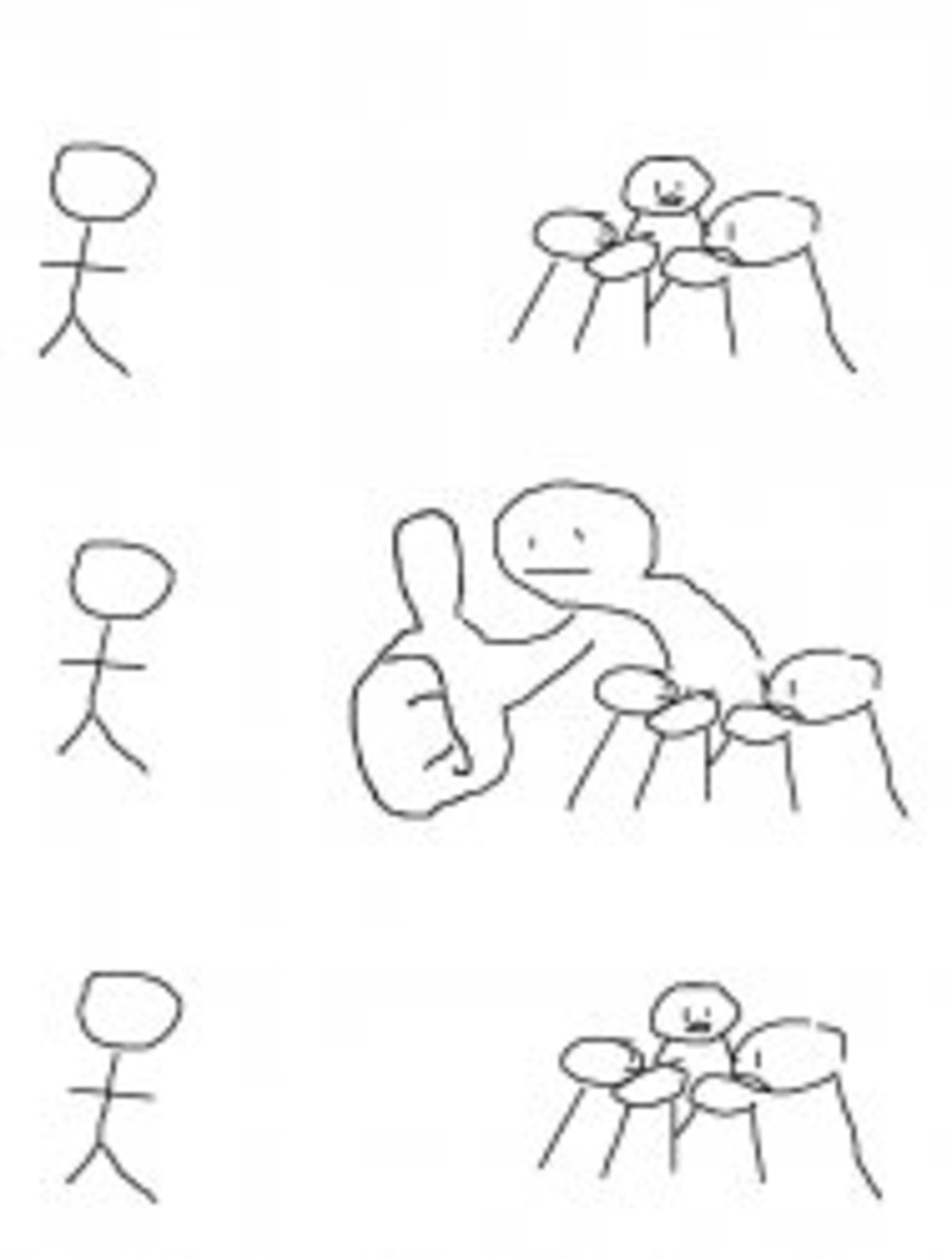
The three-panel Giant Thumb Guy comic frames a lone person’s negative opinion beside a group that acknowledges it with an oversized thumbs-up and returns to talking. In this template layout, slots 1 and 3 belong to the lone outsider, while slot 2 belongs to the group. The humor comes from the outsider’s complaint and follow-up receiving only a minimal acknowledgment.
Free to try in your browser. Add text, adjust the layout, and download your meme.
Template images may be supplied through third-party sources. Check permission, attribution, and destination-platform rules before publishing. Report a rights or removal concern.

How to use this meme template
What the Giant Thumb Guy meme means
The three-panel Giant Thumb Guy comic frames a lone person’s negative opinion beside a group that acknowledges it with an oversized thumbs-up and returns to talking. In this template layout, slots 1 and 3 belong to the lone outsider, while slot 2 belongs to the group. The humor comes from the outsider’s complaint and follow-up receiving only a minimal acknowledgment.
A three-panel black-and-white stick-figure comic. Caption slot 1 is upper left beside the lone figure; slot 2 is middle right over the group, where a member gives an oversized thumbs-up; slot 3 is lower left beside the same lone figure again. In the last panel the group resumes its conversation while the outsider remains apart.
How the joke works
The lone outsider owns slots 1 and 3; the group owns slot 2. Slot 1 is the outsider’s unsolicited negative take. Slot 2 is the group’s minimal acknowledgment (often just “👍” or “OK”), matching the giant thumbs-up. Slot 3 is the same outsider’s follow-up or baffled reaction as the group returns to its conversation. Keep the speaker sequence outsider → group → same outsider.
- Panel 1, upper-left box on the lone figure: start the outsider’s complaint or dismissive opinion.
- Panel 2, middle-right box on the group: give the group’s brief acknowledgment, matching the giant thumbs-up.
- Panel 3, lower-left box on the lone figure again: continue the same outsider’s reaction or attempt to get a response while the group carries on.
Caption examples
- THIS SHOW IS ACTUALLY KINDA TRASH
- 👍
- WAIT, Y’ALL AREN’T GONNA DEFEND IT?
Slots 1 and 3 are the lone critic speaking; slot 2 is the group’s tiny acknowledgment, with the comic showing them go back to their conversation.
- I DON’T LIKE THIS SHOW
- WE HATE IT TOO
- THE GROUP STARTS ARGUING
Slot 2 makes the group join the complaint and slot 3 assigns the group an action even though that box belongs to the lone figure.
Situations it fits
- An outsider criticizes a harmless hobby or favorite show
- A group continues enjoying something despite unsolicited negativity
- A dry acknowledgment of an opinion that does not change anyone’s mind
- Playful self-aware jokes about niche interests
When this format does not fit
- Keep the speakers in this order: lone figure in slots 1 and 3, group in slot 2.
- Do not put the group’s return to chatting as slot-3 dialogue; it is shown visually behind the lone figure.
- Do not make slot 2 a detailed argument, sincere advice, or an attempt to solve the outsider’s complaint.
- Do not change speakers between slots 1 and 3; both belong to the same lone outsider.
- Avoid directing the dismissive joke at a vulnerable person or using it to excuse targeted harassment.