I Don't Think About You At All Mad Men Meme Template
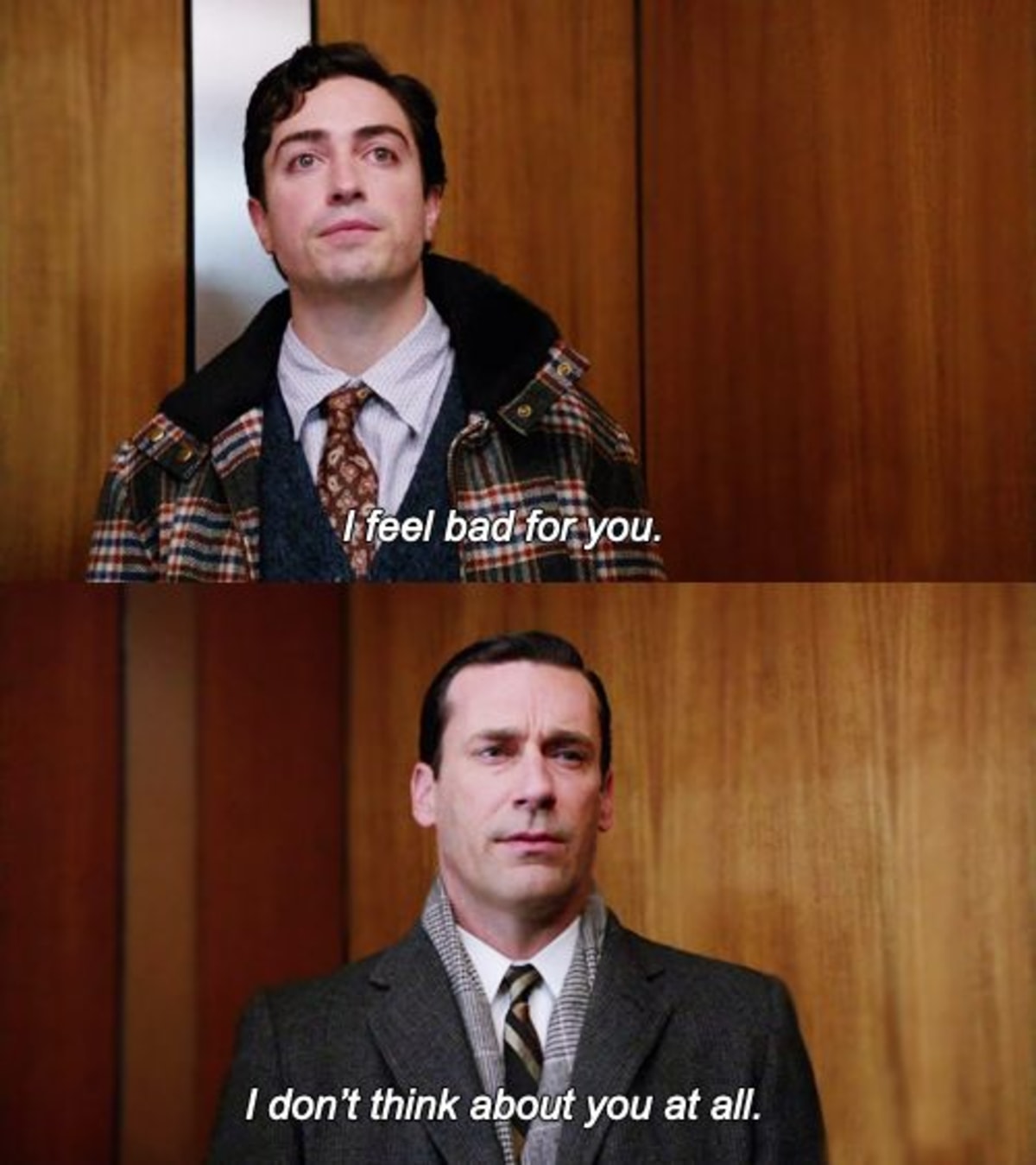
This exchange is from Mad Men season 5, episode 9, “Dark Shadows,” which aired May 13, 2012. The speaker in the upper frame is Michael Ginsberg (not Pete Campbell); Don Draper is below. Ginsberg says “I feel bad for you,” and Don answers that he does not think about him at all. The meme is used to stage an attempted jab, criticism, or claim of influence against a target’s cool dismissal. The CSV’s Pete identification is inconsistent with the active image and reliable episode accounts; use Ginsberg and Don for this template.
Free to try in your browser. Add text, adjust the layout, and download your meme.
Template images may be supplied through third-party sources. Check permission, attribution, and destination-platform rules before publishing. Report a rights or removal concern.

How to use this meme template
What the I Don't Think About You At All Mad Men meme means
This exchange is from Mad Men season 5, episode 9, “Dark Shadows,” which aired May 13, 2012. The speaker in the upper frame is Michael Ginsberg (not Pete Campbell); Don Draper is below. Ginsberg says “I feel bad for you,” and Don answers that he does not think about him at all. The meme is used to stage an attempted jab, criticism, or claim of influence against a target’s cool dismissal. The CSV’s Pete identification is inconsistent with the active image and reliable episode accounts; use Ginsberg and Don for this template.
The active 500×562 image is a two-panel Mad Men elevator exchange. Michael Ginsberg appears in the upper panel and Don Draper in the lower panel; the image itself already has white subtitles, “I feel bad for you.” and “I don’t think about you at all.” Slot 1 overlays the upper-panel area around Ginsberg’s torso (x=59, y=121, w=234, h=104); slot 2 overlays Don’s lower-panel torso (x=127, y=404, w=252, h=99). Both boxes sit near the baked subtitles, so keep captions brief and avoid merely duplicating them.
How the joke works
Slot 1 frames the upper character’s challenge, complaint, or claim that the lower character should care. Slot 2 gives the lower character’s concise, detached dismissal, making clear that the upper character or issue is irrelevant to them. These two slots form a setup and rebuttal, not two independent statements. The original baked subtitles already state the iconic exchange; avoid captions that duplicate them verbatim. Place short replacement scenarios in the same upper-to-lower dynamic.
- Upper panel / Ginsberg: the complaint, jab, or claim that the other person cares.
- Lower panel / Don: the short, composed rebuttal showing the speaker is unaffected.
Caption examples
- You keep checking whether I reviewed your pull request
- I haven't opened the notification
The upper line claims attention; the lower line deflates that claim with an unmistakably indifferent response.
- You keep checking whether I reviewed your pull request
- I have been thinking about it all day
The reply confirms the upper speaker has captured the respondent’s attention, reversing the meme’s dismissive payoff.
Situations it fits
- Someone complains that a rival is copying them, followed by a reply that shows indifference
- A critic claims their opinion should matter, met with a cool dismissal
- A minor workplace provocation that the other person barely registers
- A playful rivalry where one side believes they are occupying the other’s attention
When this format does not fit
- Do not reverse the roles: the upper slot is the challenger and the lower slot is the dismissive respondent.
- Do not make both captions affirm that the respondent cares; the punchline is indifference.
- Avoid long text that competes with the baked subtitles.
- Do not use an unrelated second line; it must answer or undercut the first.
- Avoid using the format to intensify harassment of a real person.